
The Integris manufacturing technology and cybersecurity report, 2026
Key takeaways from this report on manufacturing:
- Adaptive manufacturing—which focuses the industry on flexibility rather than simple cost reduction—is accelerating, but cybersecurity readiness is lagging—putting operations, resilience, and customer trust at risk.
- AI, IoT, cloud, and automation boost efficiency and agility, but expand attack surfaces and increase cyber exposure.
- Cybersecurity is now a company brand issue: 63% of consumers would pay more for products from secure manufacturers.
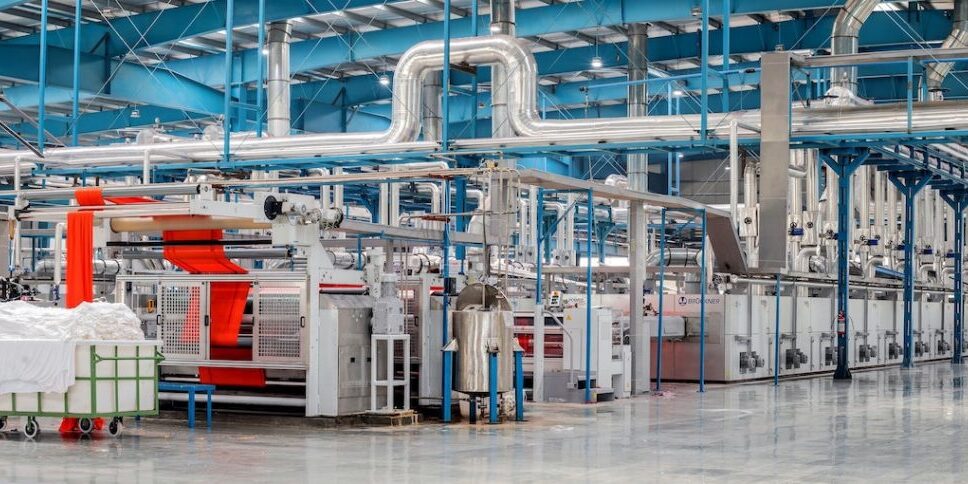
U.S. manufacturers are rapidly embracing digital transformation to become more agile, responsive, and efficient. Often referred to as “adaptive manufacturing,” this approach uses technologies such as cloud computing, artificial intelligence (AI), robotics, and Industrial Internet of Things (IoT) systems to respond dynamically to changing demand, supply chain disruptions, and operational issues with minimal human intervention.
What were previously considered emerging technologies are now becoming central to manufacturing operations. These tools help companies improve efficiency, product quality, and supply chain visibility while enabling faster decision-making through real-time data and automation. However, this shift is also introducing significant cybersecurity challenges. As manufacturing environments become more connected, many organizations are struggling to secure expanding digital ecosystems. The result is a growing gap between technology adoption and cybersecurity readiness that threatens both operational resilience and customer trust.
Based on surveys of 411 manufacturing executives and 600 U.S. consumers, this research highlights the rapid rise of adaptive manufacturing alongside mounting cybersecurity concerns. It also shows that cybersecurity is no longer viewed solely as an internal IT issue. Increasingly, it influences consumer trust, purchasing decisions, and brand reputation.
Smart manufacturing adoption accelerates
Smart manufacturing technologies are now widely deployed throughout the industry. Forty-four percent of manufacturers have implemented robotics and automation, while an equal percentage use AI and machine learning for predictive maintenance. Forty-five percent have adopted smart energy management systems, 40% use real-time monitoring technologies, and 37% have deployed Industrial IoT systems. Additionally, 25% are implementing digital twins to simulate and optimize operations.
These technologies are producing measurable business benefits.
Rather than focusing mainly on cost reduction, manufacturers increasingly prioritize agility and operational responsiveness. Sixty percent identify efficiency as the primary source of cloud ROI, followed by agility at 55%, while cost savings rank third at 47%. This reflects a broader move toward adaptive manufacturing, where connected systems and real-time insights enable organizations to respond more effectively to disruption.
Forty-four percent of manufacturers have implemented robotics and automation.
Cybersecurity risks expand alongside digital growth
As digital adoption accelerates, cybersecurity risks continue to grow. Sixty percent of manufacturers report experiencing a significant email-based security breach in the past year, while 49% report breaches involving mobile devices.
These incidents are occurring despite substantial investment in cybersecurity tools and employee training. Eighty-four percent of manufacturers have implemented security awareness training, and many organizations use advanced technologies such as secure email gateways and AI-powered anti-phishing systems.
Sixty percent of manufacturers report experiencing a significant
email-based security breach in the past year.
The challenge is not simply insufficient security spending. Instead, manufacturers are facing a rapidly expanding attack surface. Cloud environments, IoT devices, remote access systems, mobile endpoints, and third-party integrations all create additional vulnerabilities. A single compromised credential or poorly configured cloud resource can expose broader systems and operations.
This environment requires manufacturers to shift away from purely compliance-driven security strategies and toward proactive risk management. Organizations must continuously identify vulnerabilities, prioritize risks, and strengthen defenses across their entire digital ecosystem.
AI drives operational gains and new challenges
Artificial intelligence is increasingly central to both manufacturing operations and cybersecurity. Fifty-seven percent of manufacturers now use AI in vulnerability management, applying it to automated scanning, predictive analytics, and threat prioritization. These capabilities help organizations detect and respond to risks more quickly.
Fifty-seven percent of manufacturers now use AI in vulnerability management.
AI is also widely used in production environments. Sixty-one percent of manufacturers use AI-driven predictive analytics to monitor equipment performance and anticipate supply chain disruptions. Meanwhile, 50% use AI to prioritize security alerts and patching efforts.
As a result, manufacturers increasingly rely on external technology partners for support with AI integration, cybersecurity management, and broader digital transformation initiatives.
Consumers increasingly connect cybersecurity with trust
The report also highlights how cybersecurity is becoming a major factor in consumer behavior. Eighty-five percent of consumers say they are concerned about cybersecurity risks affecting manufacturers, while 62% say cybersecurity is becoming more important when evaluating brands.
Consumers also expect greater transparency from manufacturers. Eighty-nine percent believe companies should disclose security breaches, and 61% believe disclosure should always occur. However, most consumers say they rarely hear about such incidents, revealing a disconnect between public expectations and current industry practices.
The consequences of failing to meet those expectations are significant. One-quarter of consumers report already changing purchasing behavior because of cybersecurity concerns.
Consumers expect greater transparency from manufacturers. Eighty-nine percent believe companies should disclose security breach.
Cybersecurity is also becoming a competitive differentiator, marking a major shift in how cybersecurity is perceived. It is no longer simply a back-office IT issue; it is now directly connected to customer loyalty, brand reputation, and competitive advantage.
Technology partnerships become increasingly strategic
As manufacturing environments grow more complex, organizations are relying more heavily on technology partners. MSPs already play a major role in cloud operations, cybersecurity, AI implementation, and digital transformation planning.
Security is now the leading factor manufacturers consider when selecting technology providers, at the same time, many report difficulty finding providers with deep manufacturing expertise. Nearly one-third say their current providers lack sufficient understanding of manufacturing operations, compliance requirements such as CMMC, and Industrial IoT environments.
Manufacturers increasingly want strategic partners capable of delivering integrated solutions across cybersecurity, cloud infrastructure, AI, compliance, and consulting.
Securing an adaptive manufacturing facility
The manufacturing industry is entering a new era defined by adaptive operations and digital connectivity. Smart manufacturing technologies are delivering clear benefits, including greater efficiency, improved quality, and stronger agility. Yet these gains also introduce expanding cybersecurity risks that affect operations, customer trust, and brand reputation.
To succeed, manufacturers must treat cybersecurity as a core element of digital strategy. That means adopting proactive risk management, integrating security throughout the technology stack, and improving transparency around cybersecurity practices.
The manufacturers best positioned for long-term success will be those that recognize cybersecurity not only as protection against threats, but as a strategic differentiator that strengthens resilience, builds customer trust, and supports competitive growth.
To download the “Integris manufacturing technology and cybersecurity report, 2026,” click here.