Beyond keeping IT running: What businesses should expect from their technology partner
Reliable systems are essential. But when AI can change how work gets done, businesses also need help turning ideas into secure, useful improvements. That changes what they should expect from their technology partner.
Your systems can be online, your support tickets can be under control, and your people can still spend hours copying information between applications.
Someone in finance is pulling details out of emails. An operations manager is searching through SharePoint for an answer. A team has bought AI licenses, but only a handful of people know what to do with them.
None of those problems necessarily triggers an IT incident. All of them affect what the business can get done.
That is the gap I discussed with Ross Sardi, Chief Innovation Officer at Integris and previously CEO of First Focus, on the sidelines of the Integris Customer Summit 2026. Ross helped develop CORE, a managed services model built around the way businesses need technology to work today.
His starting question was straightforward: if you were building a technology services business for small and midsize companies today, what would you provide? The answer reaches well beyond the help desk.
Why keeping IT running is no longer enough
Traditional managed IT has focused on uptime, maintenance, cybersecurity and getting people back to work when something breaks. Those responsibilities remain essential.
An available system is not necessarily an efficient way to work. A business can have healthy infrastructure while employees repeat manual tasks, struggle to find information or experiment with AI without knowing how to use it safely. Those problems affect capacity, customer service and the time available for more valuable work.
Buying another license does not answer the practical questions. Who will help employees change the process? Who will connect the right information? Who will secure the workflow, support it and improve it after launch?
A one-time assessment can identify issues. A specialist project can build something useful. But if nobody owns adoption, ongoing maintenance and the next improvement, the business is left to join the pieces together.
Ross described that as both a technology challenge and a perception problem. Businesses have learned to call their managed service provider when a laptop fails. They may not think to call the same team when a manual process is holding them back.
That leaves valuable ideas stranded with the people who understand the work best.
CORE: bring improvement into the managed service
Ross’s approach to CORE began with a blank page. Instead of starting with infrastructure and adding AI at the edge, he started with what a business now needs: useful AI and automation, accessible data, effective security and people who can put those capabilities to work.
Traditional IT support remains essential. CORE brings it together with adoption, data governance, training and the technical skills to implement improvements. Ross calls this intelligent managed services.
That matters because the problems are connected. Employees cannot make good use of AI without relevant information. Connecting that information raises questions about permissions and security. An automation still needs someone to support it once it is running.
For a business leader, the expectation should be a partner that can work across those boundaries. The practical test is what happens after you identify a problem worth solving.
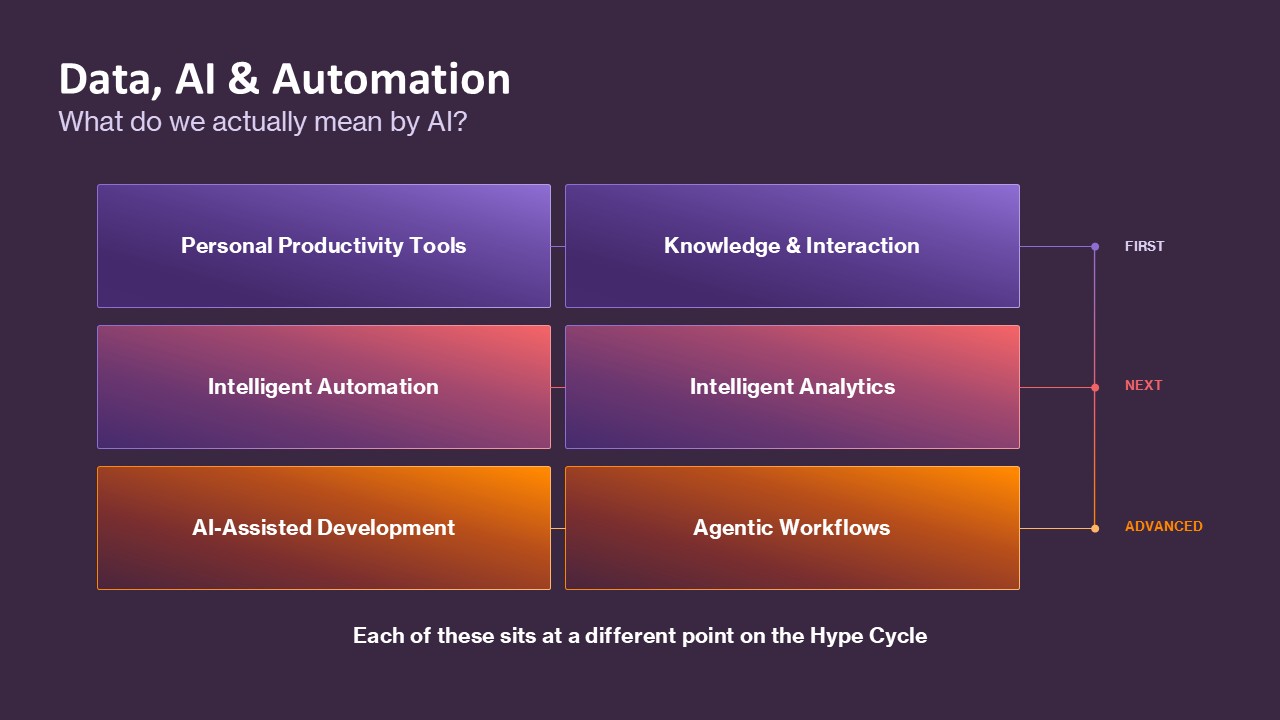
AI can support several kinds of work, from personal productivity to automation and software development. The service around it needs to reflect that range.
Expect useful access to your data, with security built in
Generic AI tools can help with generic tasks. The next step is often more specific: an employee wants an answer from company documents, a connection to another application or a clearer view of a business process.
That is where information quality, access and permissions become part of the productivity question.
Ross describes SharePoint data governance as part of CORE’s service rather than an optional extra. People will want to connect AI to business knowledge, so the partner needs to help make that access work safely.
SharePoint permissions, for example, affect which information people should be able to use. Connecting AI to poorly governed data does not remove that problem. It makes getting the foundations right more urgent.
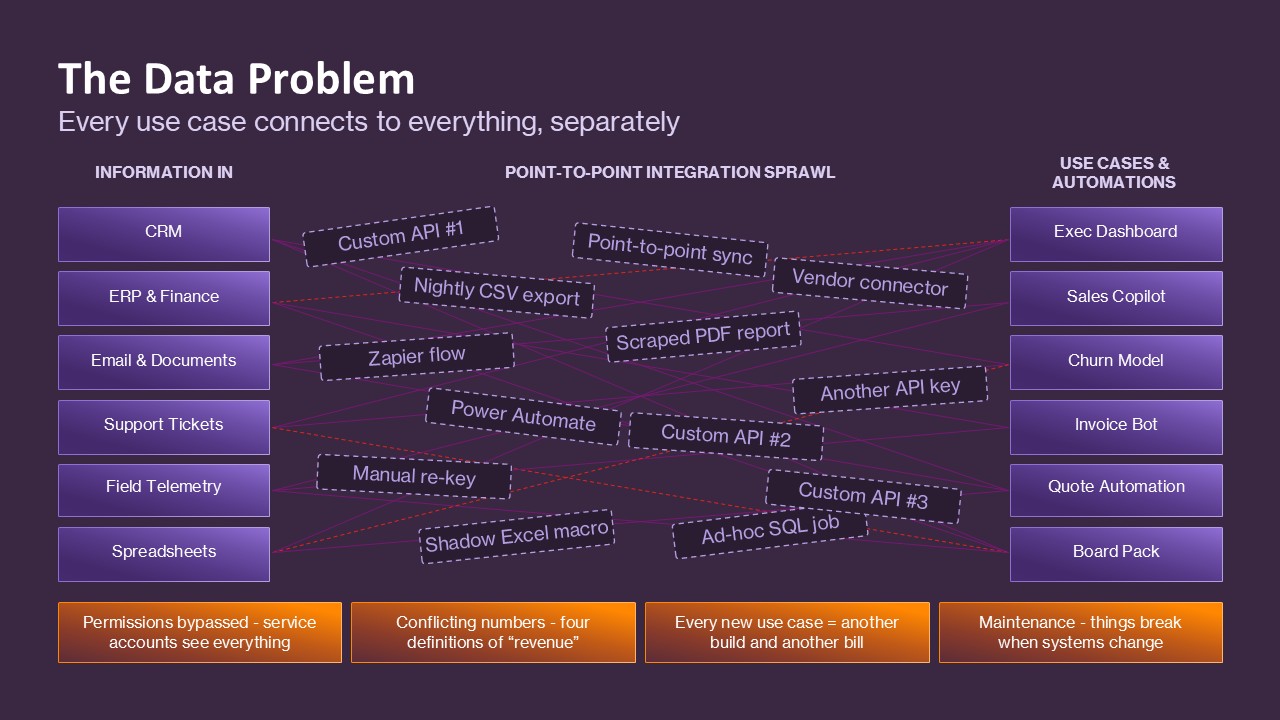
The expectation is not simply that an AI tool can reach a file. It is that the right people can use the right information, with appropriate controls and someone responsible for maintaining the connection.
Expect adoption support, not just AI licenses
Access alone will not change how people work. Ross argues for a whole-business approach to AI adoption, rather than giving a handful of employees licenses and leaving them to figure it out.
CORE’s response includes ongoing training, internal champions, hackathons and forums where employees can share what they learn. The aim is to develop people’s ability to spot an opportunity and use the tools, with technical help when they need it.
A useful expectation is that your partner helps employees become more capable over time. Training should cover both the tools and how to rethink the work, rather than stopping at a product demonstration.
Expect help turning employees’ ideas into working improvements
The best opportunities often come from the people doing the work: finance, operations, marketing, logistics and other departments. They know where information gets entered twice and which repetitive steps slow them down. A technology partner needs the skills to act on those ideas.
In CORE, that includes automation, application integration and software development capability, alongside support. An employee can still ask for help with a connection or a file. They can also ask whether a repetitive step could be automated.
Ross gives the example of extracting a purchase order number from an incoming document. Rather than repeatedly doing that by hand, the employee can bring the problem to the support team. A suitable small automation may be handled as a service request.
This gives employees somewhere to take an idea and the business a route from identifying friction to removing it.
There are still boundaries. Ross explicitly distinguishes small requests that fit within service scope from larger projects that need separate scoping. An example completed in an afternoon is not a promise that every automation will be.
Expect ownership after the solution goes live
AI-assisted development can help nontechnical employees build a prototype or a small application. Getting something to work, however, is not the same as making it ready for ongoing business use.
Ross describes customers bringing ideas and partially built software to the team for help with authentication, security, deployment and maintenance. That is another reason development capability belongs alongside managed services: someone needs to look after the result, not just build it.
Before commissioning an automation or application, ask who will train new users, respond to vulnerabilities, maintain its connections and adapt it as the business changes. CORE’s ongoing service model is intended to keep those responsibilities connected.
Expect a plan for the next improvement, not just the next renewal
Even a useful idea can stall without an owner, a priority or capacity to deliver it. Ross describes CORE account management expanding from infrastructure roadmaps into AI, automation and data: surface opportunities, understand their potential return and decide what to tackle next.
CORE Plus adds a deeper advisory layer and capacity to execute within the agreed service. In the interview, that includes workshops and a virtual chief AI officer approach, drawing on specialists across adoption, security, governance and development.
This addresses the gap between agreeing that an idea is worthwhile and getting it done. Rather than treating every improvement as an isolated event, CORE Plus creates room for an ongoing cycle of work within an agreed budget and scope.
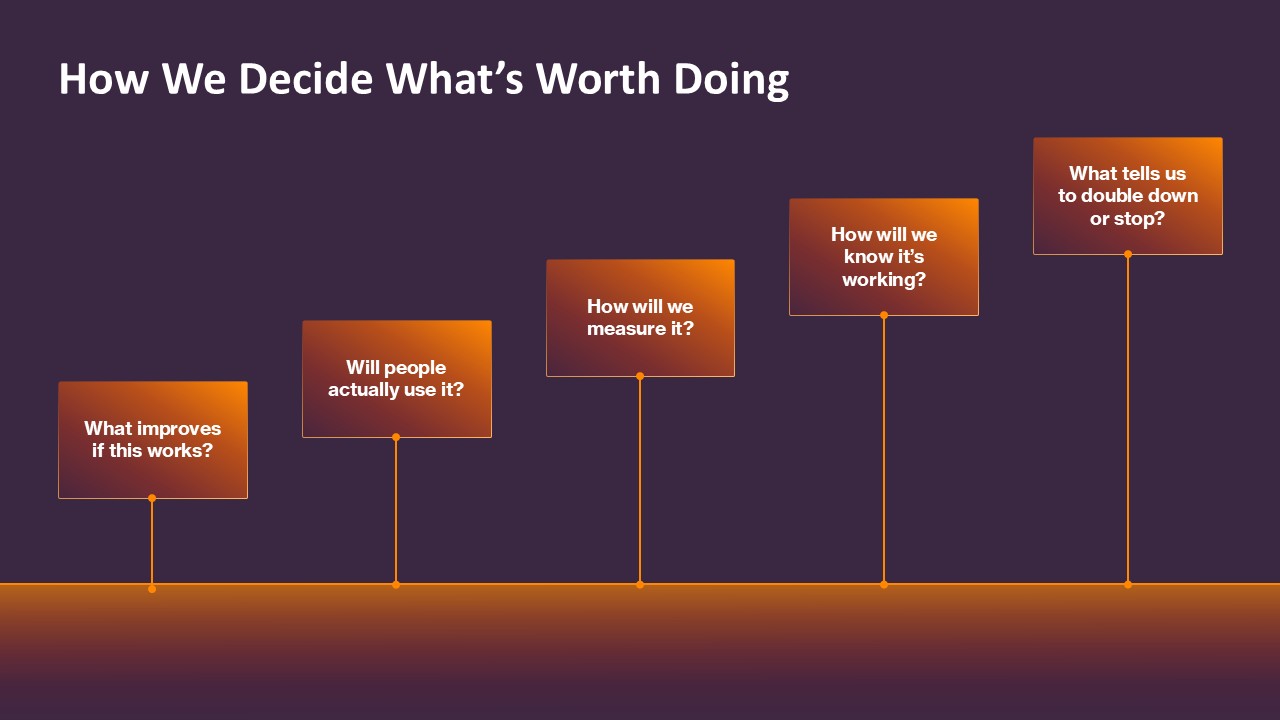
That also requires honest review. Some experiments will not deliver what was expected. Ross’s view is that teams should recognize that, learn from it and put more effort into the ideas that do work.
For business leaders, a practical review starts with the process: how long did it take before, how does it work now, and what can the team do with the capacity released? Quality, risk and customer experience matter alongside time saved.
What this looks like for customers
In our conversation, I shared an example of a customer who needed information arriving by email to update another system. Our team completed the automation in an afternoon, then helped the employee learn how to make similar changes herself. Further improvements followed.
That illustrates two parts of the model working together: technical delivery and employee enablement. It is one customer example, not a delivery-time promise for every request.
Shamrock: helping people work smarter, with a measurable business result
Shamrock, an Australian product development business in the craft market, had a major retail account that was losing money. Trends moved quickly, but manual design work and slow exchanges with suppliers made it difficult to get products to market in time.
Its people already had ideas about how AI could help. One employee was building agents and connecting them to company information, but some didn’t work as intended. She also had concerns about confidentiality and nobody to ask for help. CORE brought practical support, security and governance around that initiative, giving employees somewhere to take their ideas and the questions that came with them.
The CEO’s experience shows what that means for the help desk. He was working on a product concept using Claude on a Saturday and got stuck. He contacted First Focus and received help that weekend so he could move the idea forward. Helping someone find a better way to work had become part of the support relationship.
That translated into a different design process. Concepts that previously took days could be developed in hours. The CEO could give a graphic designer a substantially developed visual idea to refine, reducing the time spent explaining a concept and working through revisions. AI helped him develop the idea, while the designer applied their expertise to finish it.
Shamrock also made better use of its existing business knowledge. AI and information from previous work helped employees understand supplier requirements without relying as heavily on the particular person who had dealt with that supplier before. Breaking down language barriers helped the team work more effectively with overseas suppliers. Together, these changes helped products reach the market faster.
The result was a turnaround in the loss-making account. Shamrock’s accountant explained that the team had increased productivity and output without adding headcount, and the directors could see the improvement in the profit.
This brings several CORE expectations together: supporting employees as they adopt AI, helping them turn ideas into working improvements, making existing knowledge more useful, and providing help as they continue using the tools. The commercial measure was whether those changes improved the work and the profitability of the account. That is the broader role businesses should expect from their technology partner.
Ask what your technology partner will help you improve
Reliable IT and effective security remain the foundation. Businesses should also expect help adopting useful tools, connecting information safely, implementing ideas and improving what has already been built.
That is the broader responsibility CORE is designed around. The question is not simply whether your partner can keep your systems available. It is whether it can help your people make better use of them.
At your next technology review, bring one process that is slowing the business down. Ask who will help change it, what data and controls it needs, who will support it after launch and how you will know whether it worked.
That is a useful place to start a conversation with Integris about CORE.
About the author

Brendan Ritchie is SVP of Marketing at Integris.